
Fenbendazole Survivors on our Site
What is Fenbendazole?
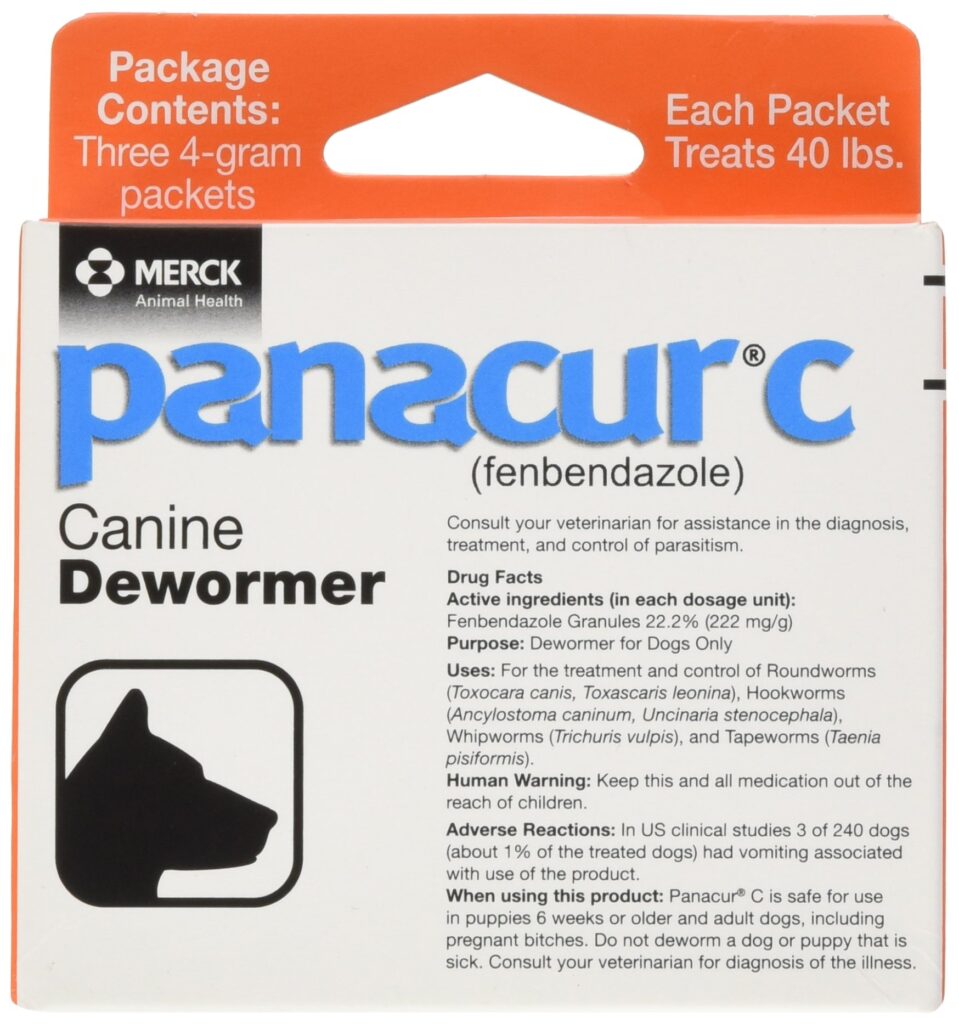
Fenbendazole is a close relative of Mebendazole, which we utilize to treat pinworms in children. The issue with Mebendazole (its human form) is its substantial cost. In cases like these, a more economical alternative is Fenbendazole, a familiar dog dewormer. Despite its association with veterinary use, it’s available over-the-counter (OTC) and is very affordable. Many individuals have employed it with successful outcomes.
Fenbendazole has been in circulation since 1974 and is employed globally. Beyond its role in eradicating parasites, it has demonstrated effectiveness as an anti-cancer agent. It’s worth noting that I’ve observed positive results in patients with minimal side effects. It’s essential to remember that practically all medications can have potential side effects.
Research indicates that Fenbendazole can induce regression in various tumor types. It can be used alongside conventional treatments like chemotherapy and radiation without interference. This underscores its repurposed use as a complementary anti-cancer medication. It’s worth mentioning that during the pandemic, repurposed drugs—medications repurposed for different indications—have been a significant focus.
Fenbendazole operates in a manner similar to many chemotherapy drugs, but without the associated side effects or toxicity. However, like most repurposed drugs, there’s a dearth of human experimentation, and conducting double-blind, placebo-controlled trials on this is unlikely for any major pharmaceutical company.
Fenbendazole is available in capsule form. It can be ordered online or purchased OTC. Since it’s minimally absorbed in the digestive tract, consumption with food is necessary. Some individuals opt to open the capsule and sprinkle it onto their food before consumption. Consuming it with food undoubtedly enhances its bioavailability. About less than 5% of individuals might experience mild stomach discomfort, particularly when taking higher doses. Note: Individuals with severe liver or kidney issues exhibit lower excretion rates for any type of drug, necessitating close monitoring of their liver function tests. Any alterations warrant discontinuation of the medication, with recovery usually occurring within a couple of weeks.
Who is Joe Tippens?
If you’ve received a cancer diagnosis or have a close family member or friend grappling with cancer, you’ve likely come across the Joe Tippens Cancer Protocol. Joe Tippens gained prominence for employing Fenbendazole, CBD Oil, Curcumin, and Vitamin E to address his lung cancer. His experience was a catalyst for the widespread adoption of Fenbendazole. In 2017, faced with a prognosis of just 3 months to live, Joe encountered the account of a scientist who had tackled her cancer using a medication intended for canines. Intrigued, he decided to experiment with it himself, incorporating a few additional elements into his approach. This venture proved successful, leading to his continued freedom from cancer.
The initial Joe Tippens Cancer Protocol involved a three-days-on, four-days-off regimen of Fenbendazole. Notably, Fenbendazole can be used continuously without developing a tolerance to it. The protocol recommends the simultaneous intake of other supplements to enhance its effectiveness, including Milk Thistle, Curcumin, and CBD drops.
How Does Fenbendazole work?
Fenbendazole eliminates parasites by selectively hindering the synthesis of microtubules, integral components of a cell’s structure that facilitate the passage of various substances into the cell for their functional roles. This includes chromosomes and even cancer cells. Cancer, characterized by rapid cell division, is linked to the process of mitosis. Fenbendazole acts by specifically obstructing these tubules, leading to the cessation of mitosis and cell division. This mechanism bears resemblance to the action of chemotherapeutic drugs like taxol and vincristine.
Currently, it is believed that Fenbendazole employs three primary mechanisms to combat cancer:
- Induction of Apoptosis: This refers to programmed cell death. Fenbendazole achieves this by interrupting the cell cycle through the inhibition of microtubules.
- Inhibition of Glucose Uptake in Cancer Cells: Malignant cells are known for their heightened glucose consumption. This is why I consistently recommend a ketogenic diet and High Dose Vitamin C for individuals with cancer. Cancer cells exhibit a glucose uptake rate 200 times faster than normal cells. This phenomenon, known as the Warburg Effect, can be visualized through PET scans. Fenbendazole curtails the supply of sugar to cancer cells by restricting glucose uptake. This is accomplished by reducing the presence of “glute transporters,” which are channels that facilitate the entry of glucose into cancer cells from the bloodstream. Additionally, the enzyme hexokinase 2, vital for fueling cancer cells with glucose, is inhibited.
- Reactivation of the P53 Gene: The P53 gene is a potent tumor suppressor in the human body. Though scarce, Fenbendazole effectively activates this gene, curbing the spread of cancer.
Noteworthy: Unlike the potential development of resistance in cancer cells towards chemotherapeutic drugs, Fenbendazole evades such resistance. Consequently, it remains efficacious even with prolonged use.
Furthermore, I’d like to acknowledge that one major mechanism of chemotherapy resistance in cancer cells involves expelling anti-cancer drugs through specific drug efflux pumps called P-Glycoproteins. In this context, Fenbendazole does not fall victim to these P-Glycoproteins, preventing its excretion from cancer cells. As a result, Fenbendazole persists within the cells, actively combating the cancer.
Fenbendazole Safety & Adverse Effects
Fenbendazole is categorized within the benzimidazole class of medications, sharing its classification with drugs like Mebendazole and Albendazole. Toxicology studies have affirmed the safety of these drugs. However, no medication is entirely devoid of potential side effects. While significant adverse reactions with fenbendazole remain uncommon, anecdotal evidence points to the following possibilities:
- Around 5% of users might encounter stomach discomfort or diarrhea, especially when taking high doses of fenbendazole without breaks.
- Individuals with severe liver or kidney impairment could experience diminished excretion rates of the medication, leading to fenbendazole accumulation and potential side effects. In such instances, it is advisable to divide doses appropriately.
- Prolonged utilization of substantial fenbendazole doses could lead to a non-symptomatic elevation in liver enzymes. This is because the substance is primarily metabolized in the liver. This elevation is temporary and can be reversed by temporarily discontinuing the medication.
To uphold optimal liver health, it is recommended to take periodic breaks from fenbendazole usage, particularly if the medication is used over extended periods (spanning months or years). Furthermore, taking daily supplements of 250 mg of Milk Thistle or 150 mg of Silymarin can contribute to maintaining liver health.
In summary, Fenbendazole’s unexpected emergence as a potential cancer treatment heralds a fresh and promising avenue in the fight against diverse types of cancer. Continued research and heightened awareness may position this drug as a pivotal element in oncology, offering renewed hope to countless cancer patients worldwide.
Fenbendazole Protocols
There are several Fenbendazole protocols. The website www.fenbendazole.com has a tab (Fenbendazole dosage) that details each.
Fenbendazole Social Media Groups:
Instructions on How to Request to Join Facebook Groups:
These Groups are all Private Groups, which means that you have to request to “Join”. Joining these groups is a Crucial step to speaking to Survivors. Here are the Steps to Joining a group and starting to communicate and get information:
- Click on the Link and Make sure you are signed into Facebook
- Click Request to Join-You will then get a list of Questions that the Group Admin designs. These are designed to make sure you are real and have personal interest in Joining the group.
- Fill out ALL the questions that are asked. Be Sincere and Honest. You are looking for Help for you or a loved one and tell them that.
- You will be approved almost all the time if you are real and sincere. Approval could be instant or take up to a few days. It all depends on the Group Admins and Group membership settings
Instructions on what to do When you are Accepted to Join Facebook Groups:
Once accepted to the Group you will receive a Notification that Admins have approved your request to Join! Here are the next steps to getting integrated into the group and getting information.
- Go to the Group homepage. Get familiar with the pages within the group. There is often very valuable information and documents uploaded and available here. For example: Discussion, Featured, Events, Media, Files..
- Reach out to the Group Admin and introduce yourself. Find the admin on the “Members” page. The message should introduce yourself, thank them for allowing you into the group and briefly explain your situation and ask for guidance. The often are very knowledgeable on Alternative Treatments.
- Post your first post into the group. Be honest and sincere and ask for help. Tell about your situation and journey and ask for Advice. Don’t be afraid to ask for Success Stories. They are there and the Survivors are very willing to help and give advice.
- Use the Search bar )Magnifying Glass” to search fro prior posts and chats that may be useful to you. Search your type of Cancer, search for specific treatment types, search for Success stories. Sort by most recent.
- Fenbendazole And Other Alternate Choices
- Fenbendazole Protocol – Cancer Support Community
- Fenbendazole – Cancer Support Group
- myycancerstory.rocks
Other:
Additional Resources:
- https://www.nature.com/articles/s41598-018-30158-6
- https://www.ncbi.nlm.nih.gov/pmc/articles/PMC3436308/
- https://www.ncbi.nlm.nih.gov/pmc/articles/PMC2687140/
- https://apps.dtic.mil/dtic/tr/fulltext/u2/a545657.pdf
- https://www.ncbi.nlm.nih.gov/pubmed/21764822
- https://www.ncbi.nlm.nih.gov/pubmed/2009737
- https://pubmed.ncbi.nlm.nih.gov/22048645/
- https://www.ncbi.nlm.nih.gov/pmc/articles/PMC6769799/
- https://www.ncbi.nlm.nih.gov/pmc/articles/PMC4096024/
- https://www.ncbi.nlm.nih.gov/pmc/articles/PMC3158014/
- https://pubmed.ncbi.nlm.nih.gov/4082261/
- https://www.mycancerstory.rocks/single-post/2016/08/22/Shake-up-your-life-how-to-change-your-own-perspective
- https://www.researchgate.net/publication/260343692_Effects_of_fenbendazole_and_vitamin_E_succinate_on_the_growth_and_survival_of_prostate_cancer_cells
- https://www.hopkinsmedicine.org/news/publications/doorways_to_discovery/doorways_to_discovery_2015/surprise_finding_yields_a_possible_tumor_fighting_drugI