

Disclaimer
The information on this site is provided purely for educational purposes and is not, in any way, intended to serve as a source of medical advice, professional diagnosis, opinion, treatment, or services for you or any other user. This extends to the content we share directly on our platform as well as the resources we link to externally.
Please note that the knowledge we present is generalized in nature. It should never be considered as a suitable replacement for personalized medical or professional care. We strongly advise against using the material we provide as a substitute for a consultation, visit, or advice from your physician or healthcare provider.
Our site’s content reflects our assessments from grounded in evidence-based research and studies. However, we accept no liability or responsibility for any actions taken based on the advice, treatment methods, diagnosis, or any other information, services, or products that you might access through our platform.
Remember, seeking professional medical advice is always the best course of action when dealing with health-related concerns. Our aim is to complement, not replace, the relationship between you and your healthcare providers.”
What is Essiac tea?
Essiac tea is a herbal mixture that has a long and notable history. Its origins can be traced back to Rene Caisse, a nurse who established a clinic in Bainbridge, Ontario, Canada, to assist cancer patients using this tonic. Interestingly, \”Essiac\” is the reverse spelling of Caisse’s last name.
Caisse did not create the blend herself; instead, she received it from an acquaintance who claimed that the tonic had cured her breast cancer. While the original blend is believed to be a traditional Ojibwa remedy, Caisse’s work in promoting it during the 1970s gained it widespread recognition.
The original proportions of the herbal formulation are trademarked and sold by a Canadian company. However, there are numerous Essiac-like teas and products available online and in stores.
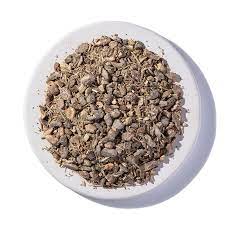
Essiac tea consists of four primary ingredients:
- Burdock root (Arctium lappa, Arctium majus): A large herbaceous plant from the daisy family, known for its potential cancer-fighting properties, blood sugar regulation, diuretic effects, wrinkle reduction, and other claimed benefits.
- Indian rhubarb root (Rheum palmatum, Rheum officinale): Alleged to provide relief from symptoms like constipation and fever, and believed to possess anticancer, antimicrobial, and immune-boosting properties.
- Sheep sorrel (Rumex acetosella): Claimed to have potential cancer-fighting abilities, along with treating diarrhea, reducing fever, and alleviating inflammation.
- Slippery elm (Ulmus rubra): Believed to help with coughs, bronchitis, diarrhea, and irritable bowel syndrome.
The original Essiac tea formula has been kept confidential since the recipe was sold to a private company, leading to debates and speculation regarding its exact composition and the optimal way to consume it.
While searching online for a basic Essiac tea recipe yields several variations, the most common blend includes:
- 1.5 pounds of burdock root
- 1 pound of powdered sheep sorrel
- 1/4 pound of slippery elm
- 1 pound of Turkish rhubarb root
These ingredients are mixed together and stored in a light-protected glass container. To prepare the tea, boiled, unchlorinated water is poured over the herbs and left to steep for 12 hours. Advocates suggest drinking a 2-ounce serving of the tea, typically unheated, before bedtime.
Benefits of Essiac Tea:
Companies selling Essiac tea and its supporters claim various benefits, including cancer treatment and prevention, HIV and AIDS therapy, immune system support, and diabetes management. However, these claims lack support from peer-reviewed, published scientific literature.
In the 1970s, researchers at Memorial Sloan Kettering Cancer Center conducted a study on mice to investigate the health claims associated with Essiac tea, with the cooperation of Caisse. Regrettably, the findings were never published, raising questions about the research methodology. Caisse subsequently refused to provide the original formulation to researchers at Memorial Sloan Kettering or the U.S. National Cancer Institute, making further investigations challenging.
Subsequent human studies were attempted in Canada but were halted by the Canadian government due to concerns about poor study design and formulation.
How it is Taken:
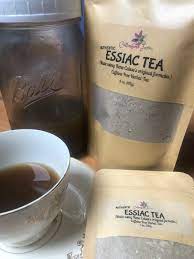
Essiac tea is commonly found in powder form, although it is also sold in capsules and tea bags. The traditional preparation method involves mixing 2 ounces (57 mL) of concentrated tea with an equal amount of heated spring water. Manufacturers typically advise consuming 1 to 12 ounces (30 to 360 mL) of the tea per day for optimal effects.
HOW IT works on cancer and other ailments:
Possessing Anti-Cancer Properties Burdock root has demonstrated anti-cancer effects in both laboratory experiments and rat studies. The inclusion of Indian Rhubarb in Essiac tea is believed to reduce pneumonic toxicity and improve lung function in cancer patients undergoing radiation therapy. Scientific research indicates that consuming Essiac tea can hinder the proliferation of cancer cells. In a test-tube study, the blend was found to impede the growth of breast cancer and leukemia cells. Additionally, Essiac tea has shown potential in inhibiting the spread of certain types of cancer.
Acts as a Natural Detoxifier Sheep sorrel, known for its anti-inflammatory properties, aids in immune enhancement and detoxification. Furthermore, Slippery elm, the fourth ingredient, contains mucilage—a gel-like substance that assists in the treatment of coughs and throat infections.
Provides Hydration and Enhances Overall Immunity Essiac tea can serve as a hydrating beverage since most teas consist of a high water content. It also contains antioxidants that may help protect against DNA damage. Essiac tea offers various other potential health benefits. It has been found to play a significant role in HIV and AIDS prevention. Even individuals without these conditions can consume this blend to aid in detoxification or as a general health tonic. Moreover, it supports immune system function and is considered a potential therapy for diabetes.
Essiac Tea also contributes to reducing wrinkles, lowering blood sugar levels, relieving constipation and fever. It has been used to treat infections, diarrhea, inflammation, fever, bronchitis, cough, and irritable bowel syndrome.
What Types of cancers does Essiac tea report to Work on?
Essiac Tea is reported to work on all types of Cancers and does not have a specific list of Cancers that it works on. We recommend to go to the Facebook Groups listed below and follow instructionsWhat is Essiac tea?
Essiac Tea Social Media Groups to Join and Learn more and Contact Survivors using Essiac tea for Cancer:
Instructions on How to Request to Join Facebook Groups:
These Groups are all Private Groups, which means that you have to request to “Join”. Joining these groups is a Crucial step to speaking to Survivors. Here are the Steps to Joining a group and starting to communicate and get information:
- Click on the Link and Make sure you are signed into Facebook
- Click Request to Join-You will then get a list of Questions that the Group Admin designs. These are designed to make sure you are real and have personal interest in Joining the group.
- Fill out ALL the questions that are asked. Be Sincere and Honest. You are looking for Help for you or a loved one and tell them that.
- You will be approved almost all the time if you are real and sincere. Approval could be instant or take up to a few days. It all depends on the Group Admins and Group membership settings
Instructions on what to do When you are Accepted to Join Facebook Groups:
Once accepted to the Group you will receive a Notification that Admins have approved your request to Join! Here are the next steps to getting integrated into the group and getting information.
- Go to the Group homepage. Get familiar with the pages within the group. There is often very valuable information and documents uploaded and available here. For example: Discussion, Featured, Events, Media, Files..
- Reach out to the Group Admin and introduce yourself. Find the admin on the “Members” page. The message should introduce yourself, thank them for allowing you into the group and briefly explain your situation and ask for guidance. The often are very knowledgeable on Alternative Treatments.
- Post your first post into the group. Be honest and sincere and ask for help. Tell about your situation and journey and ask for Advice. Don’t be afraid to ask for Success Stories. They are there and the Survivors are very willing to help and give advice.
- Use the Search bar )Magnifying Glass” to search fro prior posts and chats that may be useful to you. Search your type of Cancer, search for specific treatment types, search for Success stories. Sort by most recent.

Genuine Essiac Users
Group Type: Private- 2000+ Members
Admin: Gina Paulhus
Admin: Brian Paulhus
Ambassador: Leonel Mondrago MD
Treatment Types: Essiac Tea
Essiac: Natural Cure for Cancer
Group Type: Private- 12k+ Members
Admin: Angela Hayes John
Admin: Sebastian Gluck
Admin: Bryan Paulhus
Treatment Types: Essiac Tea
Essiac Tea Users Group
Group Type: Private- 32k+ Members
@essiac_tea on Tiktok
Admin: Natasha Evans
Admin: Pat Shannon
Treatment Types: Essiac Tea