
Vitamin C and Cancer
The relationship between vitamin C and cancer is a topic of ongoing research and debate. Vitamin C, also known as ascorbic acid, is an essential nutrient that plays a crucial role in various bodily functions, including wound healing, immune system support, and acting as an antioxidant. Antioxidants like vitamin C help neutralize free radicals, which are unstable molecules that can damage cells and potentially lead to cancer.
Some studies and research have explored the potential anti-cancer effects of high-dose vitamin C, especially when administered intravenously (IV vitamin C). Proponents of high-dose vitamin C therapy argue that it can selectively kill cancer cells while sparing normal cells. They believe that high concentrations of vitamin C generate hydrogen peroxide, a compound that can damage cancer cell DNA and lead to cell death.
All You Need to Know about Hi-Dose Vitamin C and Cancer:
Healthy cells operate aerobically, utilizing oxygen and glucose to produce energy in the form of adenosine triphosphate (ATP). In contrast, cancer cells function anaerobically, meaning they survive without oxygen and convert glucose through fermentation. Vitamin C interacts with metals in the body, creating hydrogen peroxide. While normal cells can neutralize hydrogen peroxide, cancer cells lack this ability. Consequently, the high concentration of hydrogen peroxide damages cancer cell DNA, cutting off their energy supply and causing cell death. Importantly, this process is specific to cancer cells and does not harm healthy cells.
Early experiments with high-dose intravenous (IV) vitamin C were conducted by Scottish surgeon Ewan Cameron and chemist Linus Pauling in the 1970s. These studies demonstrated the therapy’s potential in treating advanced cancer patients. IV vitamin C not only acts as a non-toxic chemotherapeutic agent but also boosts immunity, stimulates collagen formation, inhibits enzymes that aid tumor metastasis, and induces apoptosis (programmed cell death) in cancer cells.
However, the widespread use of IV vitamin C in traditional medicine is limited due to the lack of large, controlled double-blind studies, which are expensive and not typically sponsored by pharmaceutical companies. While numerous studies on vitamin C’s effectiveness in cancer treatment exist, the therapy is hindered by the inability to patent a naturally occurring nutrient, making it less attractive for financial investment.
It’s worth noting that oral vitamin C supplementation cannot achieve the high blood levels necessary to kill cancer cells. IV administration bypasses the body’s control system, allowing for 100% absorption without causing stomach upset or diarrhea. Utopia Cancer Center recognizes the safety and benefits of high-dose IV vitamin C therapy for patients and offers it as part of their Intensive Medical Program. However, it’s essential to note that this therapy is contraindicated in patients with iron overload diseases, renal insufficiency or failure, or those undergoing dialysis.
A 2022 article explains how Hi-Dose Vitamin C works to kill Cancer cells…
https://www.ncbi.nlm.nih.gov/pmc/articles/PMC9231292/. High-Dose Vitamin C for Cancer Therapy; Hsueh-Wei Chang, Academic Editor and Chien-Chih Chiu, Academic Editor
“The anti-glycolytic and apoptotic effect of high-dose vitamin-C on tumor cell toxicity. High-dose Vit-C can destroy cancer cells by utilizing two different pathways that work in tandem. Initially, by producing hydroxyl radical (OH•) through the Fenton reaction, extracellular H2O2 may effectively kill cancer cells [102]. High amounts of Fe (III) ions in the cancer microenvironment promote the oxidation of Vit-C from the ascorbate radical to DHA and Fe (II). After the generation of Fe(II), the ion enters an oxidation process via O2, resulting in the formation of superoxide (O2•−), which will be consequently converted to H2O2 and O2 by superoxide dismutase (SOD). Transferrin in the extracellular space traps Fe (III) and binds to the TfR receptor, and oxidizes the Fe(III) to Fe(II), resulting in the formation of LIP inside the tumor cell. The generated extracellular H2O2 can also diffuse directly inside tumor cells via aquaporins [46], interacting with Fe(II) to form OH•, which is hazardous to cancer cells. Then, ascorbate and the ascorbate radical recycle Fe(III) to Fe(II), to form DHA, with the generation of intercellular ROS leading to cell death by apoptosis. Second, the extracellular oxidation process of ascorbate to DHA in large quantities results in DHA uptake by glucose transporter 1 (GLUT-1). DHA is then reduced by glutathione (GSH) and NADPH to high amounts of intercellular ROS, activating poly(ADP-ribose) polymerase (PARP), which in turn consumes cellular NAD+, a co-factor of GADPH. As a result of the inhibition of GADPH, ATP production via glycolysis stops, leading to energy crisis [46]. In addition, the intercellular ROS generated by DHA oxidation can raise the metabolites and enzymatic activity in the pentose phosphate pathway (PPP), block the tri-carboxylic acid (TCA) cycle, and increase oxygen uptake, disrupting intracellular metabolic balance and resulting in irreversible cell death, due to an energy crisis. G6P, glucose-6-phosphate; farctose-6-phosphate, F-6-P; Gly-al-3P, glyceraldehyde 3-phosphate; GSSG, glutathione disulfide; SVCT, sodium-dependent vitamin C transporters, ROS, reactive oxygen species; PPP, pentose phosphate pathway; 1,3-P-gly,1,3-phosphglycerate; 3-P-gly, 3-phosphglycerate; P-Enole-P, phospo enol pyruvate; Ac-Coa, acetyl coenzyme A; GADPH, glyceraldehyde 3-phosphate dehydrogenase.
The same article has this Conclusion:
Conclusion:
“Regardless of the fact that ascorbic acid has been shown to have anticancer properties for more than 50 years, most of the mechanisms behind this action have remained a mystery. However, new results have advanced our knowledge of the biological roles and processes behind Vit-C’s anti-cancer activity; emphasizing a number of fascinating and interesting notions that offer solid scientific foundations for the use of Vit-C in cancer treatment. Ascorbate is essential for the activity of cancer-related proteins such as NF-κB, HIFs, GLUT-1, TETs, FIHs, and PHDs, all of which are involved in cancer progression and development. The discovery of ascorbate-regulated pathways will allow the development of therapeutic strategies to sensitize tumor cells to the use of ascorbic acid. Moreover, since ascorbate mediates its action through the generation of massive amounts of ROS, ascorbate oxidation requires the recycling of Fe(II)/Fe(III), where FTH sequesters the Fe(II) required in the production of ROS via the Fenton reaction. Not many studies have focused on the utilization of Cu(II)/Cu(I) to induce ascorbate oxidation, and it would be interesting to investigate if the absence of Fe(II) could be compensated for by Cu(II)/Cu(I) oxidizing ascorbate instead. Indeed, tremendous effort has been made in understanding the processes behind the redox control of the NF-kB pathway during the recent decades. More research into this crucial area will aid our understanding of how the NF-κB pathway and oxidative stress interact with other cellular signaling networks. The development of therapeutic options for the treatment of cancer might be aided by a better knowledge of the complicated interaction between the NF-κB pathway and oxidative stress, particularly that mediated by high-dose Vit-C.
Furthermore, high-dose Vit-C has shown great promise in improving cancer immunotherapy efficacy, particularly when combined with ICP, via immune system activation and cancer cell sensitization to therapy, in a variety of in vivo and in vitro studies. However, to date, no clinical trials have employed this essential strategy, necessitating additional investigations. In fact, it is critical to investigate whether high-dose Vit-C, in addition to its function in activating immune cells, may be used to minimize the toxicity caused by the combination of at least two ICP therapies. In addition, future research should concentrate on defining the precise combination dose that is likely to be efficient, less hazardous, and practicable for use in the treatment of cancer patients suffering from a variety of malignancies.
Since high-dose Vit-C can induce massive ROS concentrations that can damage cancer cells, these cells, in return, can possess highly effective antioxidant systems that can easily scavenge ROS and reduce their toxic effect. In fact, a single cancer cell can contain all of these systems, which may act in a complementarity manner to reduce the deleterious effect of ROS. Thus, a significant effort should be made to comprehend the mechanisms behind redox regulation by antioxidant systems. More studies into this critical area will help us understand how these antioxidant systems interact with one another and with other cellular signaling networks. A deeper understanding of the intricate interplay between the numerous antioxidant systems and how they work together to minimize the impact of high-dose Vit-C may assist in the development of therapeutic approaches for cancer treatment.
Moreover, these contentious data suggest that there is no benefit to intravenous delivery of Vit-C over oral treatment. However, more clinical trials evaluating the optimal method of high-dose Vit-C delivery are urgently required.
Finally, high-dose Vit-C has the definite potential to provide beneficial and cost-effective anti-cancer treatment options that should be investigated further. Ascorbic acid may become a significant treatment option in the fight against cancer, due to its widespread availability in nature, minimal toxicity, and low cost.”
Here are some additional Medical Publications and Articles Supporting Hi-Dose Vitamin C as a Cancer Treatment:
- https://jeccr.biomedcentral.com/articles/10.1186/s13046-021-02134-y High-dose intravenous vitamin C, a promising multi-targeting agent in the treatment of cancer Franziska Böttger, Andrea Vallés-Martí, Loraine Cahn & Connie R. Jimenez Journal of Experimental & Clinical Cancer Research volume 40, Article number: 343 (2021)
- https://www.science.org/content/article/vitamin-c-kills-tumor-cells-hard-treat-mutation Vitamin C kills tumor cells with hard-to-treat mutation, Study rejuvenates hopes that vitamin C can treat some common cancers; 5 NOV 2015, BYJOCELYN KAISER
- https://www.hopkinsmedicine.org/news/media/releases/how_vitamin_c_stops_the_big_c How Vitamin C Stops the Big “C”, An unexpected antioxidant mechanism is at play, researchers say; Release Date: September 10, 2007
Here is a link to Video Testimonials from Survivors:
Social Media Groups:
Instructions on How to Request to Join Facebook Groups:
These Groups are all Private Groups, which means that you have to request to “Join”. Joining these groups is a Crucial step to speaking to Survivors. Here are the Steps to Joining a group and starting to communicate and get information:
- Click on the Link and Make sure you are signed into Facebook
- Click Request to Join-You will then get a list of Questions that the Group Admin designs. These are designed to make sure you are real and have personal interest in Joining the group.
- Fill out ALL the questions that are asked. Be Sincere and Honest. You are looking for Help for you or a loved one and tell them that.
- You will be approved almost all the time if you are real and sincere. Approval could be instant or take up to a few days. It all depends on the Group Admins and Group membership settings
Instructions on what to do When you are Accepted to Join Facebook Groups:
Once accepted to the Group you will receive a Notification that Admins have approved your request to Join! Here are the next steps to getting integrated into the group and getting information.
- Go to the Group homepage. Get familiar with the pages within the group. There is often very valuable information and documents uploaded and available here. For example: Discussion, Featured, Events, Media, Files..
- Reach out to the Group Admin and introduce yourself. Find the admin on the “Members” page. The message should introduce yourself, thank them for allowing you into the group and briefly explain your situation and ask for guidance. The often are very knowledgeable on Alternative Treatments.
- Post your first post into the group. Be honest and sincere and ask for help. Tell about your situation and journey and ask for Advice. Don’t be afraid to ask for Success Stories. They are there and the Survivors are very willing to help and give advice.
- Use the Search bar )Magnifying Glass” to search fro prior posts and chats that may be useful to you. Search your type of Cancer, search for specific treatment types, search for Success stories. Sort by most recent.
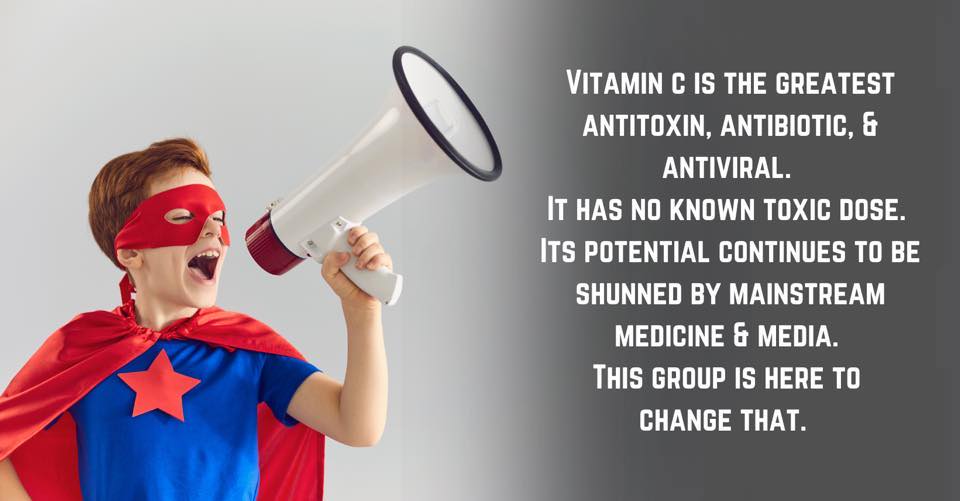
Vitamin C & Orthomolecular Medicine For Optimal Health
Group Type: Private- 96k+ Members
Admin: Katie Gironda
Admin: Thomas Johnson
Treatment Types: Vitamin C High Dose